Saturday, March 28, 2015

A Very Sweet Winery


I wonder if our guide felt a little overwhelmed with all the female students...


Visit their website


Visiting Pella

Chuck holds the map while Prof. Diamant gives us some background of what we are going to see

The city was founded in 399 BC by King Archelaus (413–399 BC) as the capital of his kingdom, replacing the older palace-city of Aigai. After this, it was the seat of the king Philip II and of Alexander, his son. In 168 BC, it was sacked by the Romans, and its treasury transported to Rome. Later, the city was destroyed by an earthquake and eventually was rebuilt over its ruins. By 180 AD, Lucian could describe it in passing as "now insignificant, with very few inhabitants". ~wiki

However, in its time, Pella was an amazing city, built on a logical grid-style design. What the archaeologists have discovered is that the inhabitants had amazing mosaic floors in their homes. Simply beautiful. We roamed through the museum to behold the mosaics and the artifacts that were uncovered, then moved onto the site itself.


floor mosaic

Dionysus riding a panther

these were truly art pieces with great attention to detail and shading - this is not cut tile, either, but small colored pebbles


coinage found onsite

amazing gold crown - pure gold


here is one of the mosaics they have left on sight - cool, huh?

Thursday, March 26, 2015

Alexander the Great

Along Thessaloniki's waterfront is one of the most impressive statues I have seen this semester - a fabulous bronze of Alexander the Great on his horse heading into battle. I was really impressed with how the artist conveyed the emotion and action in this piece - photos just don't do it justice. (Perhaps sunshine would have helped!) 

Information about Alex the Great cited from History of Macedonia.


"Alexander III the Great, the King of Macedonia and conqueror of the Persian Empire is considered one of the greatest military geniuses of all times. He was inspiration for later conquerors such as Hannibal the Carthaginian, the Romans Pompey and Caesar, and Napoleon. Alexander was born in 356 BC in Pella, the ancient capital of Macedonia. He was son of Philip II, King of Macedonia, and Olympias, the princess of neighboring Epirus.


Alexander spent his childhood watching his father transforming Macedonia into a great military power, winning victory after victory on the battlefields throughout the Balkans. At age 12 he showed his equestrian skill to his father and all who were watching when he tamed Bucephalus, an unruly stallion horse, unable to be ridden and devouring the flesh of all who had tried. Plutarch writes: "Philip and his friends looked on at first in silence and anxiety for the result, till seeing him turn at the end of his career, and come back rejoicing and triumphing for what he had performed, they all burst out into acclamations of applause; and his father shedding tears, it is said, for joy, kissed him as he came down from his horse, and in his transport said, 'O my son, look thee out a kingdom equal to and worthy of thyself, for Macedonia is too little for thee' " (Alex. 6.8.).


Alexander would ride Bucephalus in all of his major battles, together till the very end. When he was 13, Philip hired the Greek philosopher Aristotle to be Alexander’s personal tutor. During the next three years Aristotle gave Alexander a training in rhetoric and literature and stimulated his interest in science, medicine, and philosophy, all of which became of importance in Alexander’s later life.

Hoplites

Barbarians (Persians)

In 340, when Philip assembled a large Macedonian army and invaded Thrace, he left his 16 years old son with the power to rule Macedonia in his absence as regent, which shows that even at such young age Alexander was recognized as quite capable. But as the Macedonian army advanced deep into Thrace, the Thracian tribe of Maedi bordering north-eastern Macedonia rebelled and posed a danger to the country. Alexander assembled an army, led it against the rebels, and with swift action defeated the Maedi, captured their stronghold, and renamed it after himself to Alexandropolis. Two years later in 338 BC, Philip gave his son a commanding post among the senior generals as the Macedonian army invaded Greece. At the Battle of Chaeronea the Greeks were defeated and Alexander displayed his bravery by destroying the elite Greek force, the Theban Secret Band. Some ancient historians recorded that the Macedonians won the battle thanks to his bravery." (see citation source above)

Alexandros O Megas (the large or great)

Our prof was quite adamant that truly Alexander wasn't the one who was great, but it was his father, Philip. He was sure that Philip would have stopped at a more reasonable expansion, and let his troops return home to their families. I would tend to agree.

Amazing display and tribute.

Wednesday, March 25, 2015

Happy Independence Day!

Happy Greek Independence Day, everyone. Greeks are celebrating the Greek uprising in 1821 against the Ottoman Empire, which originated from the Monastery of Agia Lavras in the Peloponnese. Today is celebrated by visiting the local parades and eating the traditional dish of codfish and garlic dip, bakaliaros skordalia.
~source CYA


Monday, March 23, 2015

At the Sea Front (+ Understanding Various Eating Establishments)

Just enjoy these pics of the picturesque waterfront of Thessaloniki.
It is pretty awesome...even if there wasn't a lot of sunshine.


see the rowers?

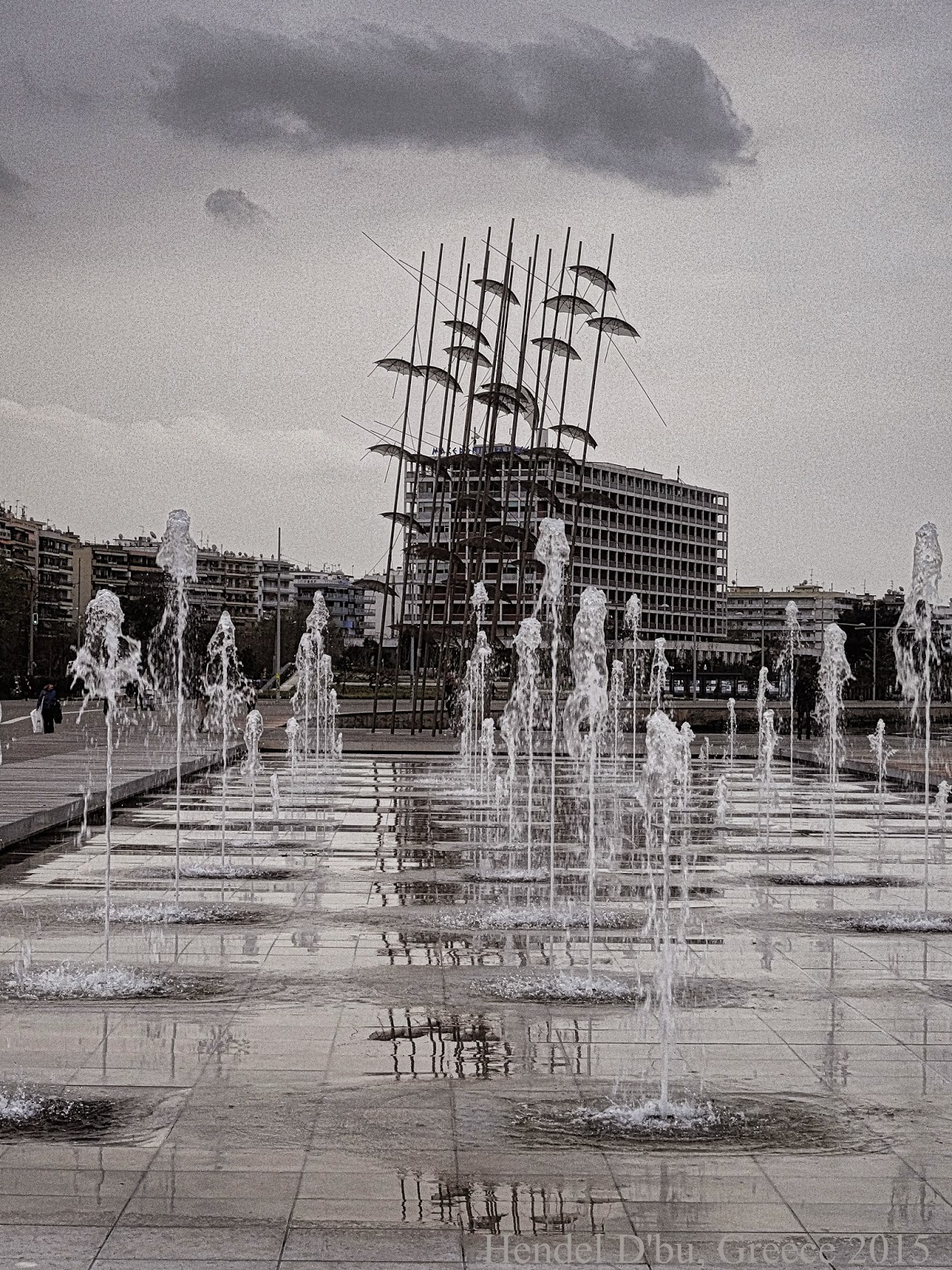
when it is hot, I'm sure the little ones (and those young at heart) must love to run
through the fountains


this is a very cool piece of art incorporating umbrellas - love it!


you can see the port in the distance

yes, those gentlemen are fishing

some of these are hotels, but most are apartments
on the street level, however, there is cafe after cafe with lots of outdoor seating
Since I mentioned cafes, I'll take a minute to explain the important differences between eating establishments here in Greece:

Bakery or Sweet Shop - offering sweets only seen in your dreams, most larger bakeries also offer coffee or other beverages and may have a small seating area (mostly outside).

Stand - this can be a gyro stand, a hot dog or burger stand, or a crepe stand; most times they have a small seating area and offer drinks such as soft drinks and water. These are often your cheapest choice for incredible food. (The best hot dog I have ever had was one we had in Thessaloniki! Amazing!) A lot of times these small places will deliver, too - which is pretty awesome.

Fast Food Joint - not many of these, but we liked Goody's. Serving typical fast food Greek-style for cheap, we only had 'filter' coffee (which they consider American). However, with our coffees we got two cheese pies for free - wow! There is a McD's just off Syntagma, but mostly I've seen people having coffee and smoking (just like everywhere else!) - their prices are American prices, too...not too appealing to Athenians.

Cafe (or kaf-en-eo) - a small (or sometimes bigger) restaurant that serves coffee drinks and snacks (or small plates) like cheese pie, cookies or pastries, yogurt and honey, or sometimes small sandwiches.

Bar - coffee, beer, wine, and hard alcohol are available at bars. Sometimes snacks, but not usually. Although, there is always a snacky-type of thing offered, such as peanuts. Interestingly, ouzo is such a strong drink, there is always the option of ouzo + snack because anyone who drinks ouzo on an empty  stomach is in trouble before they even know it. (Drunkenness is highly discouraged and frowned upon in Greece where self-control in all things is highly prized.)

Taverna - a type of restaurant that serves food 'family style' with portions intended to share. You can get everything from a coffee and snack (see cafe) to a full family meal at a taverna. The only hitch is that most of them, especially in small towns, open quite late (some 7 or later) for the Greek-style later dinner 'hour' (unless you are in a high tourist area, then they are open for lunch). Typically it is expected that you will spend a substantial amount of time there not just eating but socializing, as well. They oftentimes will offer a dessert or 'digestive' aperitif gratis for your patronage. Tavernas often have similar menus offering souvlaki and gyros (of course), and mousaka, sausage kebabs, different types of salads along with Greek salad (obviously), burgers and meatballs, spaghetti, and specialty dishes cooked in 'pots' (like casseroles or stews). Fish and seafood is always on the menu, as well as desserts/sweets. Beverages, besides coffee, include beer, wine, ouzo, and sometimes other hard liquors.

Restaurant - sit down type of eating establishment of which Americans are well accustomed, usually more expensive. Many still do serve 'family style' though, for sharing. This seems to be a rather new addition to Greek culture, in my observation.
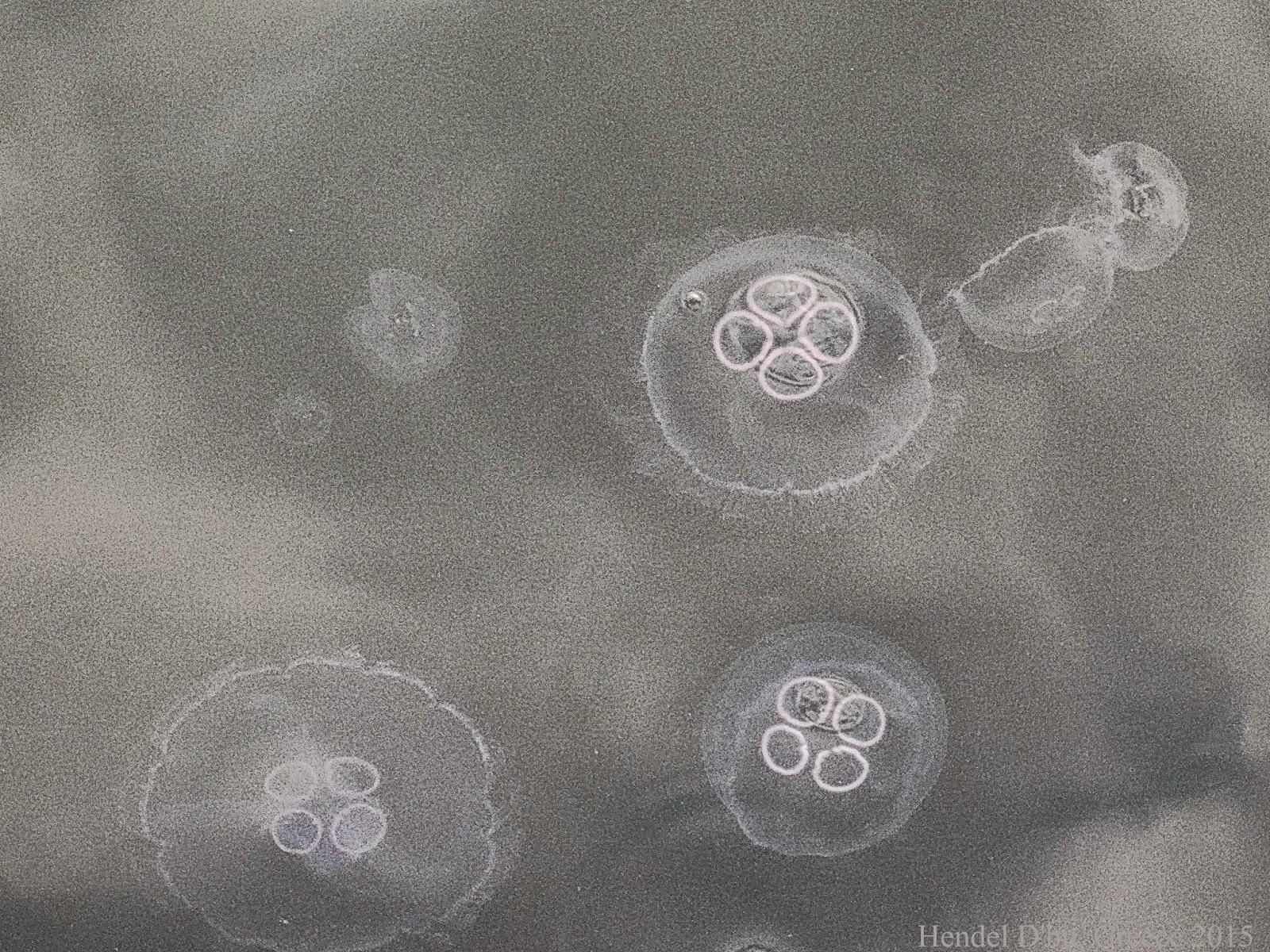


jellies!


This walk along the sea front has been my most relaxing and enjoyable time in Greece. It was pretty cold, and I was in a heavy coat, but so very worth it. The promenade goes for miles along the water and you can even rent bikes to ride in the marked bike path. It must be heavenly in the warmer temperatures.


The Arch in the Middle of the City


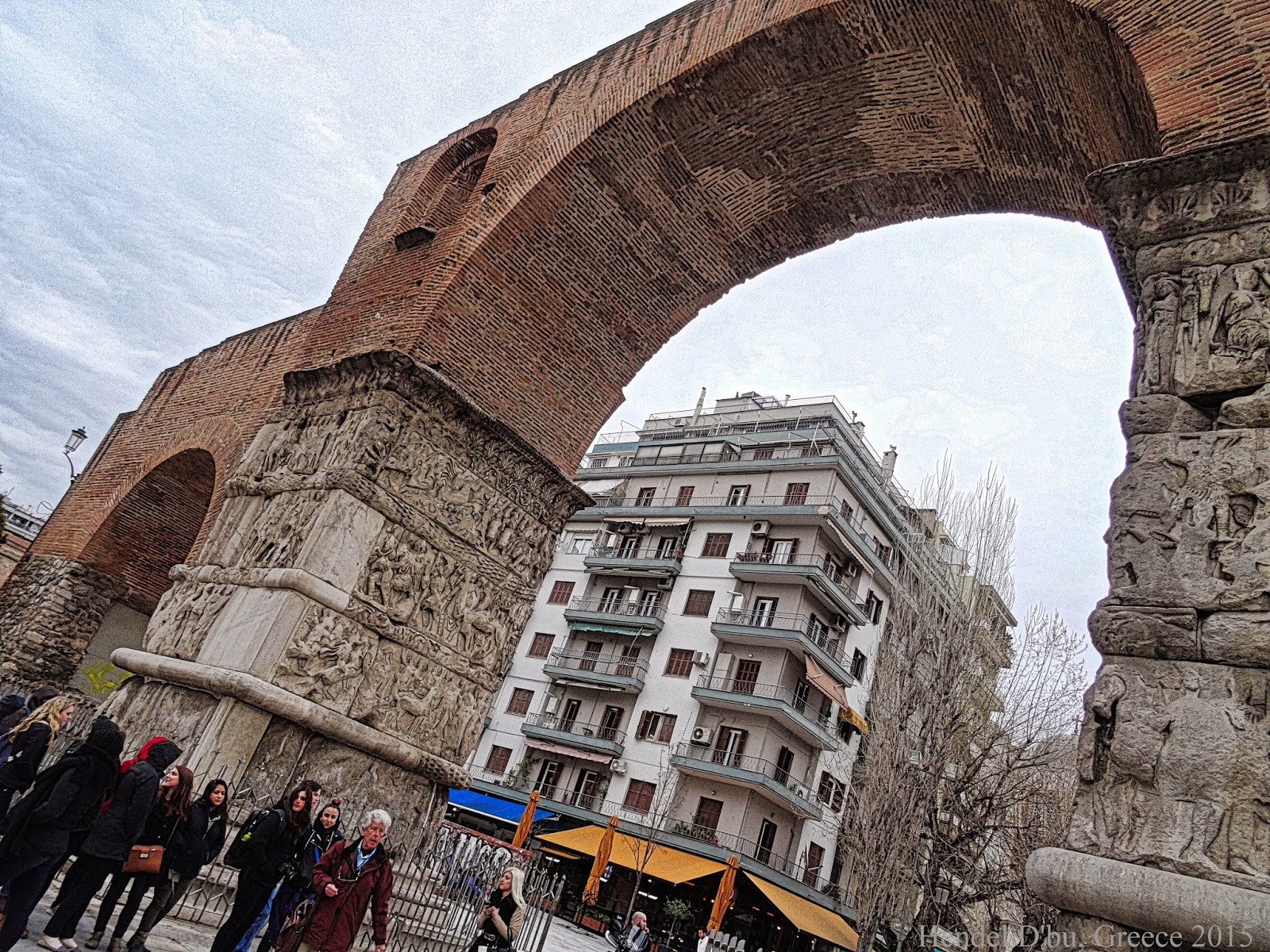
One of the most characteristic monuments of Thessaloniki is the Arch of Galerius, located on the upper side of the Via Egnatia (THE Roman Road**), a short distance from the Rotunda.

The Arch of Galerius is a glorious monument, whose purpose was not practical, but memorial and honorary. It is a triumphal arch built shortly before 305 AD to honor the Roman Emperor Galerius, after the final victory over the Persians. The triumphal arch that was positioned perpendicular to the ancient Egnatia, which crossed the city (west to east) forming a part of the Roman Palace of Galerius, which was developed through the current squares of Navarinou and Hippodrome. The construction design of the Arch of Galerius was such as the two major roads to pass beneath it and crossed right in the middle, the current Egnatia Street and the street starting from the Arch and ending at the south gate of the wall of the Rotunda. ~source


**The Via Egnatia (Greek: Ἐγνατία Ὁδός) was a road constructed by the Romans in the 2nd century BC. It crossed the Roman provinces of Illyricum, Macedonia, and Thrace, running through territory that is now part of modern Albania, the Republic of Macedonia, Greece, and European Turkey. ~wiki

Ever heard of the Roman Road? Yeah...me, too! It was rather exciting for me to know that this road was THE famous road after which many a Christian missionary fashioned their salvation message to non-believers.